
Key Takeaways
- Demolishing older buildings gradually reduces the asbestos remaining in our built environment, but the removal process itself can create moments of exposure.
- Asbestos-containing materials that sat undisturbed for decades can release fibers when they are cut, broken, crushed, or torn out during demolition.
- Whether demolition creates a hazard depends on how materials are identified and handled, not on the fact that a building is old.
- Demolition workers face the highest potential exposure, along with construction workers, contractors, electricians, plumbers, maintenance workers, and abatement professionals.
- First responders can encounter asbestos unexpectedly during fires and structural collapses in older buildings.
- Nearby residents are not automatically exposed when a properly managed project is underway, but risk rises when materials are overlooked or handled without precautions.
- Before demolition, a building should be inspected, suspect materials tested, an abatement plan developed, and asbestos removed, contained, and disposed of under applicable requirements.
- Asbestos cannot be identified by sight. Ordinary-looking insulation, flooring, or cement products may contain it.
- This matters in Pennsylvania, where decades of manufacturing, mining, railroad, steel, and power generation left many older facilities now being redeveloped.
- Because asbestos-related diseases can take decades to appear, a worker exposed on a demolition site today may not learn of the consequences for many years.
Across the United States, older buildings are constantly being renovated, replaced, and demolished. Aging schools are being rebuilt, old factories are being redeveloped, and outdated homes, hospitals, offices, and commercial buildings are coming down to make room for something new.
In many ways, this is progress.
As these older structures disappear, so do the asbestos-containing materials that were used throughout them decades ago. Over time, this can reduce the amount of asbestos remaining in our built environment.
But there is an important question that comes with that progress:

Could demolishing older buildings temporarily increase the amount of asbestos fibers in the air?
The answer depends heavily on how asbestos-containing materials are handled. When these materials are properly identified, removed, contained, and disposed of, the risk of exposure can be controlled. But when demolition disturbs asbestos-containing materials without the proper precautions, microscopic fibers can become airborne.
That creates a complicated reality: we may be reducing the amount of asbestos in our communities while simultaneously creating opportunities for exposure as we remove it.
Asbestos May Be Declining, But Demolition Can Create New Exposure
There is an important contradiction in the way we are dealing with asbestos today.
On one hand, the amount of asbestos-containing material in our communities is gradually decreasing. Older buildings are being renovated, replaced, or demolished, removing materials that may have contained asbestos for decades. In that sense, every building safely remediated and taken down can represent progress toward reducing the amount of asbestos remaining in our environment.
But removing those materials creates another concern: disturbing asbestos can release microscopic fibers into the air.
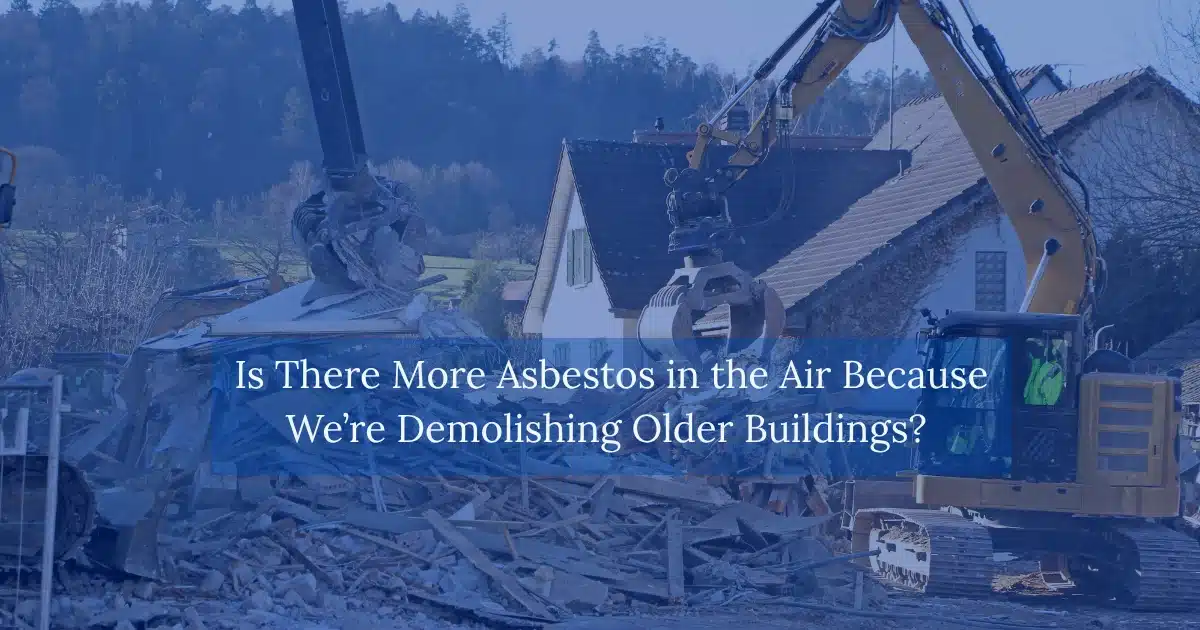
When an older building is demolished, materials that have remained undisturbed for decades may suddenly be cut, broken, crushed, or removed. If asbestos-containing materials are not properly identified and handled before demolition, fibers can become airborne and potentially expose the workers performing the demolition, contractors, first responders, and people in the surrounding area.
That creates a complicated reality. We may be making progress in reducing the amount of asbestos that remains in our buildings while simultaneously creating moments of increased exposure as those buildings come down.
And the consequences of those exposures may not be immediately visible.
Asbestos-related diseases can take decades to develop. A person who encounters asbestos fibers during a demolition project today may not experience symptoms for many years. That makes it especially important to take precautions now, even when the amount of asbestos remaining in our communities is decreasing.
How Demolition Can Release Asbestos Fibers
Asbestos-containing materials do not necessarily pose the same risk when they remain intact and undisturbed. Demolition can change that.
Breaking walls, removing insulation, tearing out flooring, cutting pipes, crushing materials, or using heavy machinery can disturb asbestos-containing products. When that happens, microscopic fibers can be released into the surrounding air.
Because asbestos fibers are extremely small, they cannot necessarily be seen with the naked eye. Once airborne, they can be inhaled by people in the immediate area.
This is why asbestos inspections and proper abatement procedures are so important before demolition begins.
The concern is not simply that an old building contains asbestos. The concern is what happens to that asbestos when the building is disturbed.
Who Could Be Exposed During Demolition?
Demolition workers are among the people who may face the greatest potential for exposure because they can be directly involved in removing or breaking apart building materials.
Construction workers, contractors, electricians, plumbers, maintenance workers, and asbestos abatement professionals may also encounter asbestos during renovation or demolition projects.
But workers are not necessarily the only people who should be considered.
Depending on how a demolition project is managed, people who live, work, or travel near the site could potentially encounter asbestos fibers if they are released beyond the controlled work area.
First responders may also encounter asbestos unexpectedly when responding to fires, structural collapses, or other emergencies involving older buildings.
This is one reason asbestos awareness remains important even as the country continues moving away from asbestos-containing construction materials.
What About People Living Near a Demolition Site?
Seeing an older building being demolished does not automatically mean that nearby residents are being exposed to asbestos.
Properly managed demolition projects are designed to control asbestos-containing materials and limit the release of fibers. Inspections, containment, removal procedures, protective equipment, and other safety measures can all help reduce potential exposure.
However, the concern becomes greater when asbestos-containing materials are overlooked, improperly handled, or disturbed without appropriate precautions.
People living near major demolition projects may therefore want to pay attention to information provided by local authorities, contractors, or other responsible parties—particularly when an older structure is involved.
The Risk May Not Be Visible for Decades
One of the most concerning aspects of asbestos exposure is that its consequences may not appear immediately.
Asbestos-related diseases can have extremely long latency periods. Someone may be exposed to asbestos and remain healthy for decades before developing an asbestos-related illness.
Mesothelioma, an aggressive cancer associated with asbestos exposure, is one example. Other asbestos-related diseases include asbestosis and certain forms of lung cancer.
This long latency period can make it difficult for someone to connect a diagnosis later in life to an exposure that occurred years or even decades earlier.
For example, a construction or demolition worker exposed to asbestos today may not know that exposure played a role in their health until many years from now.
That is why preventing exposure in the first place remains so important.
Progress Does Not Mean the Risk Is Gone
The demolition of aging buildings is not inherently dangerous, and properly managed demolition projects have procedures in place to identify and control asbestos-containing materials.
In fact, safely removing asbestos from older structures is an important part of reducing future exposure.
The goal is to remove asbestos-containing materials without allowing fibers to spread into the air or surrounding environment.
Still, the transition away from older buildings should not lead us to overlook the people who may be exposed during that process.
As communities continue replacing aging schools, factories, homes, hospitals, and industrial facilities, workers and community members may encounter asbestos as part of that redevelopment.
Removing asbestos from our built environment is progress—but how we remove it matters.
What Should Happen Before an Older Building Is Demolished?
Before demolition begins, the building should be evaluated for asbestos-containing materials. If asbestos is identified, appropriate procedures should be followed to prevent unnecessary exposure.
Depending on the project, this may include:
- Inspecting the structure for potential asbestos-containing materials.
- Testing suspect materials when necessary.
- Developing an appropriate asbestos-management or abatement plan.
- Removing or containing asbestos-containing materials using proper procedures.
- Following applicable federal, state, and local requirements.
- Using appropriate protective equipment and controls for workers.
- Properly handling and disposing of asbestos-containing waste.
The objective is straightforward: remove the asbestos without creating a new exposure problem in the process.
Why This Matters in Pennsylvania
This issue is particularly relevant in Pennsylvania, where many communities have a long history of manufacturing, mining, railroads, steel production, power generation, and other industries.
Many older industrial facilities and buildings were constructed during periods when asbestos was widely used.
As these properties are renovated, redeveloped, or demolished, asbestos-containing materials may still be present.
That means asbestos is not simply a problem belonging to the past. The material may have been installed decades ago, but today’s workers can still encounter it while taking those buildings apart.
For Pennsylvania communities undergoing redevelopment, asbestos awareness can be an important part of protecting workers and the public.
Asbestos Does Not Simply Disappear When a Building Comes Down
Demolishing a building removes the structure, but it does not automatically eliminate the asbestos contained within it.
If asbestos-containing materials are present, they must be appropriately identified, removed, contained, and disposed of according to applicable requirements.
This is particularly important because asbestos cannot reliably be identified simply by looking at a material. Something that appears to be ordinary insulation, flooring, cement, or another construction product may contain asbestos.
That is why older buildings should be properly evaluated before significant renovation or demolition work begins.
What This Means for Asbestos Exposure Today
The decline in asbestos use does not mean asbestos exposure is a problem of the past.
In many cases, the asbestos people encounter today was installed decades ago.
As communities replace aging infrastructure and redevelop older properties, those previously installed materials can once again become relevant.
The important distinction is that demolition itself does not automatically create dangerous asbestos exposure. The potential risk depends on whether asbestos-containing materials are present and how they are identified, disturbed, contained, removed, and disposed of.
Proper planning and safety procedures can significantly reduce the potential for exposure.
At the same time, it is worth recognizing that the effort to remove asbestos from older buildings may affect people along the way. The workers tearing down these structures are not simply removing old buildings; they may be working around materials that can have serious health consequences if improperly handled.
What If You Believe You Were Exposed to Asbestos?
If you have worked in construction, demolition, manufacturing, power plants, shipyards, factories, or other industries where asbestos may have been present, understanding your potential exposure history can be important.
Because asbestos-related diseases can take decades to develop, an exposure that happened many years ago can still be relevant today.
If you or a loved one has been diagnosed with mesothelioma or another asbestos-related disease, documenting your occupational and environmental history may help identify where and when exposure occurred.
At the Halpern Law Firm, we have spent decades helping individuals and families affected by asbestos exposure understand their legal options. If you believe your illness may be connected to asbestos exposure, speaking with an experienced asbestos attorney can help you understand your rights and potential options.
Final Thoughts
The country is making progress in moving away from asbestos.
Older buildings are coming down. Aging infrastructure is being replaced. Asbestos-containing materials are being removed from places where they have remained for decades.
That progress matters.
But it also raises an important concern: the process of removing asbestos can create opportunities for exposure if it is not handled properly.
A building may come down in a matter of hours, but the consequences of asbestos exposure can last a lifetime, and in some cases, may not become apparent for decades.
As communities continue to grow and redevelop, asbestos safety needs to remain part of the conversation.
We may eventually remove asbestos from many of the buildings around us. The challenge is making sure that process does not put more people at risk along the way.
For more information, call (800) 505-6000, fill out our contact form, or utilize our chat feature.
Frequently Asked Questions
Does demolishing an old building automatically release asbestos into the air?
No. Demolition itself does not automatically create dangerous exposure. What matters is whether asbestos-containing materials are present and how they are identified, contained, removed, and disposed of. A properly managed project with inspection, abatement, and containment procedures can significantly limit fiber release. Risk rises when materials are overlooked or disturbed without precautions.
A building near my home is being torn down. Should I be worried?
Seeing an older building come down does not mean nearby residents are being exposed. Properly managed projects are designed to control asbestos-containing materials and limit fiber release beyond the work area. If an older structure is involved, it is reasonable to pay attention to information from local authorities and the contractor, and to ask whether an asbestos inspection was completed before work began.
Who is required to inspect a building for asbestos before demolition?
Federal NESHAP rules generally require that structures be inspected for asbestos-containing materials before renovation or demolition, with state and local requirements layered on top. In Pennsylvania, the Department of Environmental Protection oversees notification and abatement requirements. Responsibility typically falls on the building owner or the contractor performing the work, depending on the project.
What should I do if I think a demolition site near me is mishandling asbestos?
Document what you are seeing, including dates, photographs, and the address. Report your concerns to your local code enforcement or health department and to the Pennsylvania Department of Environmental Protection, which handles asbestos abatement complaints. Workers with concerns about conditions on a job site can also file a complaint with OSHA.
What protections should demolition workers have on the job?
OSHA sets requirements for asbestos work that can include exposure monitoring, regulated work areas, engineering controls such as wetting materials, appropriate respiratory protection, protective clothing, decontamination procedures, and training. Workers who believe these protections are not being provided can raise the issue with their employer or file a complaint with OSHA.
Can I tell whether a material contains asbestos by looking at it?
No. Asbestos cannot reliably be identified by sight. Insulation, flooring, ceiling tile, cement products, roofing, and joint compound can all look ordinary while containing asbestos. Confirmation requires laboratory testing of a sample collected by a trained inspector, which is why older buildings should be evaluated before significant renovation or demolition begins.
I worked demolition years ago. Could that exposure still matter?
Yes. Asbestos-related diseases have long latency periods, so an exposure from years or decades ago can still be relevant to your health today. Tell your doctor about your work history, and if you develop persistent or unexplained respiratory symptoms, make sure that history is part of the conversation.
What if I was exposed during demolition and later diagnosed with an asbestos-related disease?
Documenting your occupational history is an important first step, including where you worked, what your duties involved, which sites you worked on, and roughly when. Claims in these cases are typically brought against the manufacturers of asbestos-containing products rather than requiring you to identify a single moment of exposure. An attorney who handles asbestos cases can investigate employment records, job sites, products, and coworker accounts.
What does it cost to have my case reviewed?
Nothing. The Halpern Law Firm offers free, no-obligation case reviews and handles asbestos cases on a contingency basis, meaning no fee unless we recover compensation for you. Call (800) 505-6000 or fill out our contact form and someone will be with you right away.



